The Intimate Partner Violence Reform Initiative was created in May 2022 to coordinate policy and system-level work across agencies in Allegheny County to improve a complex and fragmented system for both survivors of intimate partner violence (IPV) and those who use violence.
Stakeholders from local and federal criminal justice systems, victim service organizations, community groups, healthcare and human services are working to improve the ways in which people can access help, how our systems work together and share information, and how we can prevent the most serious harm. This includes innovations in adapting and implementing intimate partner violence focused deterrence strategies in Allegheny County.
Across the U.S., cities are facing increasing numbers of people experiencing homelessness. Meanwhile, an inadequate supply of deeply affordable housing has made it nearly impossible for individuals and families to move out of the shelter system.
Allegheny County’s 500 in 500 initiative responded to this needs gap with urgency, coordination, flexibility and creative problem-solving. County and City government, housing authorities, nonprofit organizations, foundations, developers and advocacy groups came together to make existing units or building conversions available for people living in shelters. The initiative moved hundreds of people from shelter to permanent housing, freed up shelter space for individuals and families in crisis and reduced strain across the homelessness response system.
Read the report below to learn how the initiative took shape, hear perspectives from those closest to the work and explore results as of day 500.
A Dramatic Change, In 500 Days
Sometimes, if circumstances create a sufficient sense of urgency, leaders can find creative ways to solve what seemed to be a chronic problem. That’s what happened when leaders in Allegheny County came together to design a bold initiative to increase the availability of deeply affordable housing for people experiencing homelessness. The resulting initiative has moved hundreds of people from shelter to permanent housing, freeing up emergency shelter space for individuals and families in crisis.
Across the U.S., cities have been dealing with the growing number of people experiencing homelessness. Meanwhile, an inadequate supply of affordable housing made it impossible for individuals and families to move out of the shelter system. The result? Shelters, meant to be a short-term solution to a crisis situation, were serving as longer-term housing for people who were ready to live more independently in permanent affordable housing, while those in need of temporary emergency shelter were forced to wait—on the streets, in parks, in doorways or in temporary encampments. The visibility of these encampments and other issues related to people having no place to go led to a loud and persistent public outcry and call for solutions.
In response, County and City government, housing authorities, nonprofit organizations, foundations, developers and advocacy groups came together to rethink how to help people move from shelters and the streets to permanent residences.
On June 6, 2024, Allegheny County Executive Sara Innamorato introduced a bold initiative called “500 in 500,” with the goal of identifying 500 units of “deeply affordable” housing in the next 500 days to move people from shelter to stable housing.
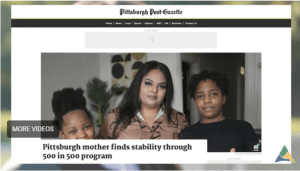
Allegheny County Executive Sara Innamorato announces the 500 in 500 initiative in June 2024, alongside Pam, who shared her personal story about moving from shelter to housing.
Two important strategic decisions shaped the initiative. First, instead of undertaking new construction, 500 in 500 focused on making existing units or building conversions available for people living in shelters. Second, it targeted people with relatively low needs for social services whose stay in shelter persisted due to barriers in securing stable housing, such as high rents or finding a unit. The initiative focused on a gap in the system: while existing housing programs prioritize people with higher risk or vulnerability, 500 in 500 was designed for people who do not meet that qualifying threshold and instead just needed an affordable unit to move on from shelter.
“Chronic homelessness is too big an issue, and people don’t know what to do about it,” said Erin Dalton, director of the Allegheny County Department of Human Services (DHS). “So we reframed an ongoing, overwhelming problem with a specific, time-limited benchmark for success.”
The initiative’s 500-day mark arrived on October 18, 2025. This report describes the process, the results and how they were achieved.
Formulating a strategy
Affordable housing was a high priority for Innamorato—and an issue she understood well. Having experienced housing instability as a teen, Innamorato prioritized housing policy issues long before becoming County Executive. She served on the board of the Allegheny County Housing Authority (ACHA), and as a State Representative introduced the landmark Whole Home Repairs Act in the state legislature. When elected to lead Allegheny County, Innamorato made it clear that affordable, accessible housing for everyone in Allegheny County was one of her signature priorities.
For Dalton, who managed DHS’s analytics work before becoming its director, everything starts with data. The most obvious data in this case were rising numbers of people on the streets and longer stays in shelters. But along with increasing need, Dalton also saw hopeful data on the supply side, in the form of the thousands of empty apartment units and subsidized housing vouchers available through the City and County housing authorities.
Debbie, a former teacher, in her new apartment with her dog Baxter. Debbie moved into her apartment in November 2024.
Public housing and voucher subsidies are in heavy demand, but Rich Stephenson, executive director of ACHA, knew one way to reduce the bottleneck. Since the moratorium on evictions during the COVID-19 pandemic ended, ACHA’s inventory of unoccupied units had grown because previous tenants, who had since been evicted, had left behind units that were uninhabitable.
“We had a substantial number of units with $5,000 to $15,000 of damage, mostly from families who had been living there for a long time and not paying rent,” Stephenson explained. “Because of our limited resources, we could not repair these units. Now, DHS needed these family units.”
Local developers also came to the table to dedicate units specifically for people coming from shelter. “The County Executive set a clear expectation that this was not business as usual,” explained Ed Nusser, Director of Housing Strategy for Allegheny County. “We leveraged the resources we had, telling developers that if they’re getting County support, we now expect some of their units to be available for people to move out of shelter. And the developers stepped up to be part of the solution.”
“The County Executive brought her political will and expertise to bear and coordinated many public- and private-sector players to align around solving this problem,” said Kendall Pelling, executive director of Rising Tide, a community organization with a focus on preserving affordable housing. “We have many projects that would not be happening today without 500 in 500.”
As the vision for 500 in 500 emerged, Allegheny County approached local foundation partners for help. Five area foundations stepped forward with a combined $3.4 million of assistance. While 500 in 500 didn’t have a budget, per se—part of the special sauce was that its success was mostly based on process improvements that didn’t cost money—this private support funded key parts of the initiative, including the rehabilitation of the housing authorities’ vacant rental units and supportive and case management services to assist housing recipients.
“Grantmaking is about investing in people you trust,” said Lauri Fink, senior program officer at Henry L. Hillman Foundation. “We have trust in the County Executive, Erin and County staff to find the best way forward.”
DHS expanded its own complement of staff helping people move from shelters to permanent housing and provided funding that enabled ACHA to hire six staff to provide supportive services to tenants. In addition, the authority used Urban Redevelopment Authority funds to purchase a 19-unit building on Pittsburgh’s North Side. The Housing Authority of the City of Pittsburgh (HACP) made project-based vouchers (which are attached to the unit, not the resident) available for 500 in 500 tenants moving into ACHA’s North Side location and other private developments.
Nate, age 65 years old, in his new apartment. Nate moved into his apartment in May of 2025.
HACP’s main procedural change involved setting aside both project-based and tenant-based vouchers for the 500 in 500 population. “What made this successful was that our staff interacted directly with the DHS caseworkers rather than the unhoused clients,” said Sauntee Turner, HACP government relations liaison. “They could collect all the needed documents for the application, so we just had to do background checks for eligibility. We got the process down from the usual 30 or 40 days to 11 days.”
The housing authorities also made vouchers portable across municipal lines—which was important, so that people could find an apartment in a neighborhood that worked for them.
Expediting the flow
Chuck Keenan, an administrator in DHS’s Office of Community Services, saw firsthand the challenges shelter staff faced in helping clients move into permanent housing. Before the 500 in 500 initiative, an effort known as the Second Avenue Commons pilot revealed that shelter staff did not have a clear understanding of eligibility for Continuum of Care (CoC) programs or access to resources that identified viable alternative housing pathways.
DHS addressed these system gaps by sharing information and developing resources to build shared understanding, clarify housing pathways and strengthen alignment across partners. This positioned the County to take on the 500 in 500 initiative from a place of readiness.
With those earlier challenges addressed—and with more public housing units and vouchers coming online—the 500 in 500 goal began to sound achievable. However, success depended on the system’s ability to move people quickly and on whether housing units could remain available long enough to make a match.
Private landlords willing to rent to a 500 in 500 participant could not hold units open indefinitely. To balance timely placements with landlord needs, DHS asked landlords and ACHA to commit to holding a unit for 500 in 500 clients for up to 14 days. “We don’t want our clients to get demoralized by looking at a unit and then finding out it’s been taken,” Keenan explained. “If we can’t match anyone to the unit in two weeks, then they can offer it elsewhere.”
Landlords welcomed the arrangement because it often brought paying tenants quickly. But meeting the 14-day window required case managers to act quickly. When the initiative began, case managers had to physically scan spreadsheets to match potential occupants to units that met their eligibility and preferences.
To address this issue, DHS’s Chief Technology Officer Rachel Silver streamlined the process by constructing a detailed dashboard where participating landlords enter pertinent information about their unit, including location, number of bedrooms, any age requirement, access to public transit, what utilities are included, whether pets or smoking are permitted, and if they will accept tenants with a prior history of felonies or evictions. The dashboard already contains a master list of all public housing properties, so the housing authorities can simply check a box when a particular unit becomes open.
Thanks to this dashboard, case managers can go online, enter a client’s characteristics, and see all the available units that fit the search criteria. Or they can select an open unit, see all the prospective tenants whose criteria match it, and reserve it directly through the platform.
Brent Weinert, who helps individuals prepare for a housing placement, deeply appreciates the changes. “Doing subsidized housing applications takes a lot of paperwork,” he noted. Before 500 in 500, “you might do 20 applications in the hope that one might work.” Now, the dashboard and ACHA’s preference designation for people who have nowhere to live create a high percentage of success. Weinert said that in many cases, clients have been able to move from intake to a housing offer within 30 days.
Weinert’s team has grown to seven caseworkers who conduct housing assessments and develop permanent housing plans for clients who do not qualify for higher levels of supportive housing services.
One frequent obstacle to housing eligibility is that many applicants lack the documentation—birth certificate, social security card and ID card—that public housing authorities require. To resolve that bottleneck, DHS senior advisor Kathy McCauley recruited a team of eight part-time staff, including some DHS retirees with prior case management experience, who have so far helped 700 individuals assemble their documentation so that they are housing-ready. Because new shelter residents continually arrive, this project remains in place.
While Weinert works with single individuals, Remy Harris supervises a team assisting families. Although most families exit from shelter within six months, Harris has seen some stay for much longer—especially those facing housing barriers such as prior evictions, a criminal record, or owing money to a housing authority.
Along with the streamlined matching and application process, Harris credits the stronger relationship between DHS and the housing authorities, which includes weekly coordination meetings, with making her work easier.
“They know they can count on us, so they are more willing to take people coming from the shelter system in their units,” Harris said.
Support from 500 in 500 does not end when an individual or family moves into a home. A tenant support program, created two years ago, embraced the task of reaching out to 300 households during 2025; by October, they had already served 290. Program coordinators work with clients to develop a support plan that addresses tangible needs such as food, transportation, furniture and employment assistance. “I believe the most significant impact our team has made on our clients is not just resource linkage but providing support and reassurance that the client has the ability to maintain housing and to further pursue a life of stability and self-sufficiency,” said James Greer, tenant support program administrator.
Treating people in tents with dignity
Few people support tent cities in downtown areas, but just as few support callous emptying of encampments where unhoused people have placed their scant possessions. 500 in 500 offered a different approach to this vexing problem.
Muhammad Ali Nasir (better known as Man-E) played a key role. Man-E founded an outreach program for current and former jail residents that expanded into homeless outreach in 2022 and later became part of 1Hood Media. In this role, he met with City and County leaders, insisting that before they cleaned out any encampments, they needed to give residents a viable place to go.
Man-E had been involved from start to finish with a 40-tent encampment that popped up along the Eliza Furnace Trail near downtown. “I gave the first tent to someone living there,” he said. “They’d been kicked out of a shelter. If they were going to shut down the encampment, we wanted it to happen in a dignified way.”
That’s exactly what happened in fall 2024, when the County, City, outreach workers and advocates worked together to move people inside. Man-E and other outreach workers compiled a list of the encampment residents, their living situation (i.e., whether they had a partner, a pet, or other needs) and what housing they would accept. As a placement was identified for each, Man-E helped transport their belongings to the new location. Only then was the tent marked as vacant and ready for removal.
Contrary to popular assumptions, Man-E said the majority of encampment residents were there for financial reasons, not due to mental health or substance use issues. Some had been released from jail with no local family or social support. All were happy to move into housing options that worked for them, including scattered site shelters, bridge programs and permanent housing.
“I did not always trust DHS or City government before this project,” Man-E acknowledged. “Now that I have worked closely with them to eradicate homelessness, I have seen the fruits of their labor.”
Lisa Frank, former chief operating and administrative officer for the City of Pittsburgh, highlighted the impact of 500 in 500 in enabling city government to offer a credible alternative to living unsheltered.
“People can come into a shelter through the front door, but they have to have a back door so that they can leave shelter and be properly housed,” Frank stated. “A congregate shelter with minimal privacy is not how people want to live. A lot of people won’t want to come in from the cold if they think they will end up on the top bunk in a room of 30 people for the next 365 days. With the focus on housing, we create flow in our system. Now, if someone puts up a tent, outreach workers can go out and tell them that this is not a safe place to live but that we can help them find one.
“Unhoused people can see, just like everyone else, what’s working or not working,” Frank added. “When they learn that their friends are finding credible alternatives to living alongside a trail, that changes the conversation. 500 in 500 has made it possible for us to say to people living outside, ‘Come to our shelter and we can work from there.'”
Results as of Day 500
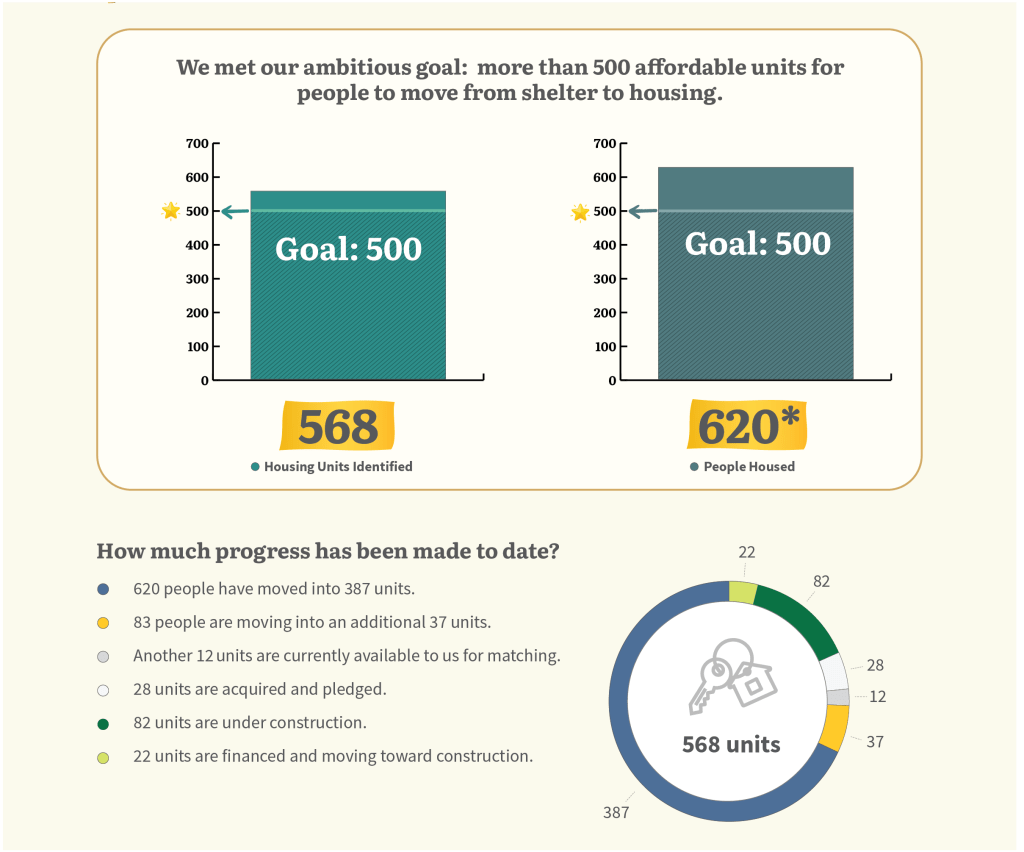
Quantitatively, there’s no question that 500 in 500 has been a success. As of day 500 (October 18, 2025):
Forty-nine percent (273) of the units were in the private market, forty-one percent (228) were from a housing authority and the remaining 9% (52) were supportive housing.
Two hundred forty-four adults, including many who are 55+, and 102 families with children have secured housing. Most families with children had a household size of two to four people, but the initiative has found housing for families with as many as eight members.
Among single adults, the average number of exits to rental units increased 35%, from about 20 per month in the year preceding the initiative to an average of 27 per month during the initiative.
As of early November 2025, 98% of families with children and 95% of adults who leased a unit through 500 in 500 had not returned to the homelessness system.
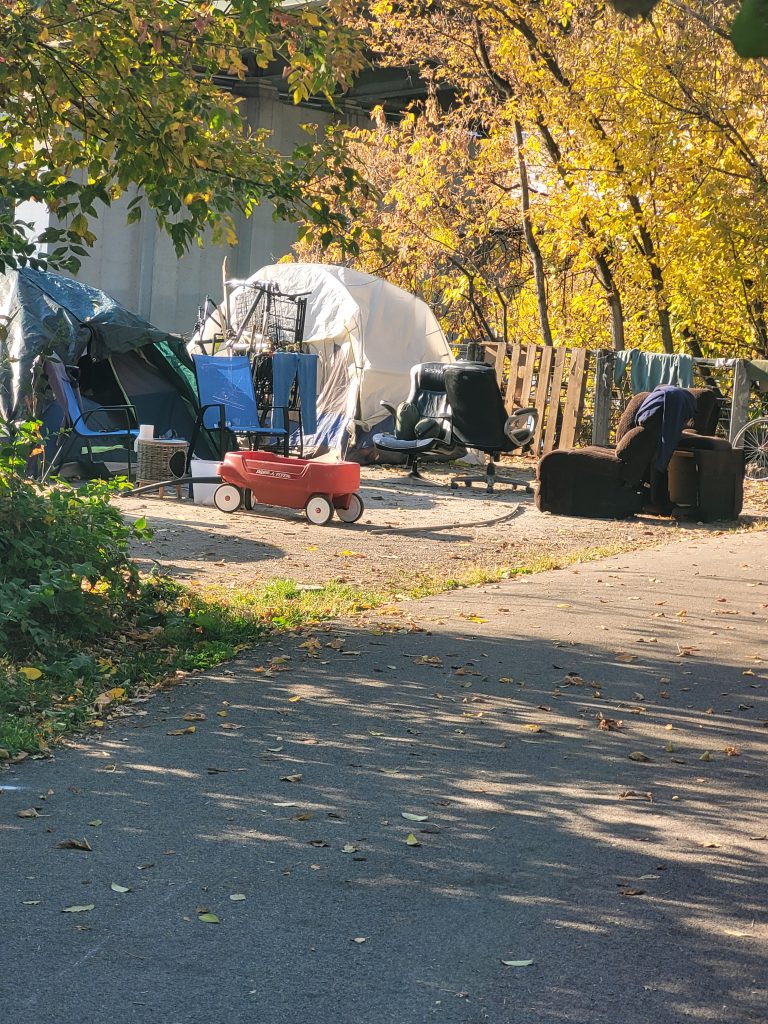
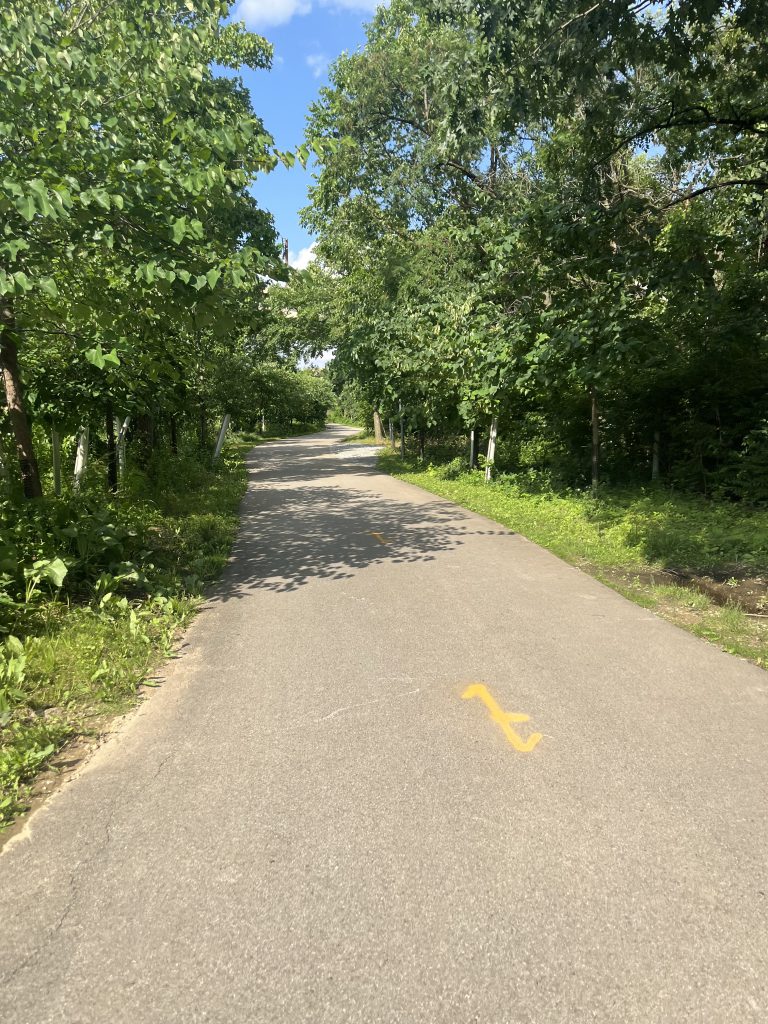
The total number of tents along the riverfront trails and in downtown Pittsburgh reached a high of 143 on August 20, 2024; that number stood at two as of the end of October.
Northside Riverfront Trail, 2024
Northside Riverfront Trail, 2025
When the County set out to quickly house individuals staying in shelter who were assessed as relatively low-risk, they relied on a predictive risk model—the same model used to identify those eligible for permanent supportive housing. Allegheny County DHS is one of only a few governments in the world using predictive analytics to target interventions. Most systems still depend on manual, time-consuming assessment tools that are less accurate and often reinforce bias. Those approaches result in the less precise identification of target populations, thus diluting the impact of interventions. In contrast, DHS’s models have repeatedly proven to be more accurate than traditional methods and to reduce racial disparities in outcomes. This data-driven precision is a key reason for the success of 500 in 500.
Among over 400 people who leased through 500 in 500 through June 2025:
Only 6% subsequently experienced a mental health crisis
A remarkably low 1% had a mental health inpatient stay
Only 4% had more than four emergency department visits (compared with over 40% for their high-risk peers staying in shelter)
Only 1% had a booking in the County Jail
Qualitatively, participants and stakeholders have expressed appreciation for the quality and efficiency of service; the fruitful collaboration between DHS and the City and County housing authorities; the inclusion of a broad range of stakeholders concerned about the attractiveness of downtown Pittsburgh; and the innovation and decency with which Pittsburgh and Allegheny County have tackled the vexing problems of homelessness and tent encampments.
“It was a privilege to be invited to the 500 in 500 table early on,” said Matt Galluzzo, president and CEO of Riverlife. “Erin Dalton and DHS have done a brilliant job of using data to understand the problem better, advance solutions, and set an audacious goal to get the system working as it should. I commend the City and County for approaching this problem in an appropriate and dignified way. This is a great example of Pittsburghers understanding our community and rallying to support those in need.”
“It is exciting to see so many City and County departments come together to work toward the same end goal,” said Fink of Henry L. Hillman Foundation.
“500 in 500 has succeeded in getting everyone focused on moving people into housing.”
Chuck Rohrer, HACP communications director, echoed Fink’s sentiments: “The interagency cooperation is much better than before. It’s nice to see that Pittsburgh can pull together and achieve such an ambitious goal.”
“I could never have imagined a government office operating with this speed and agility, especially while relying on in-house expertise,” said Silver, the DHS technology officer. “Peers at other levels of government are often surprised by how quickly we can move and how much we do in-house.”
For ACHA’s Stephenson, the chance to deploy his agency’s resources with greater effectiveness has been rejuvenating. “This partnership is not going to end on the 500th day,” he declared. “It will absolutely continue as long as I am sitting here.”
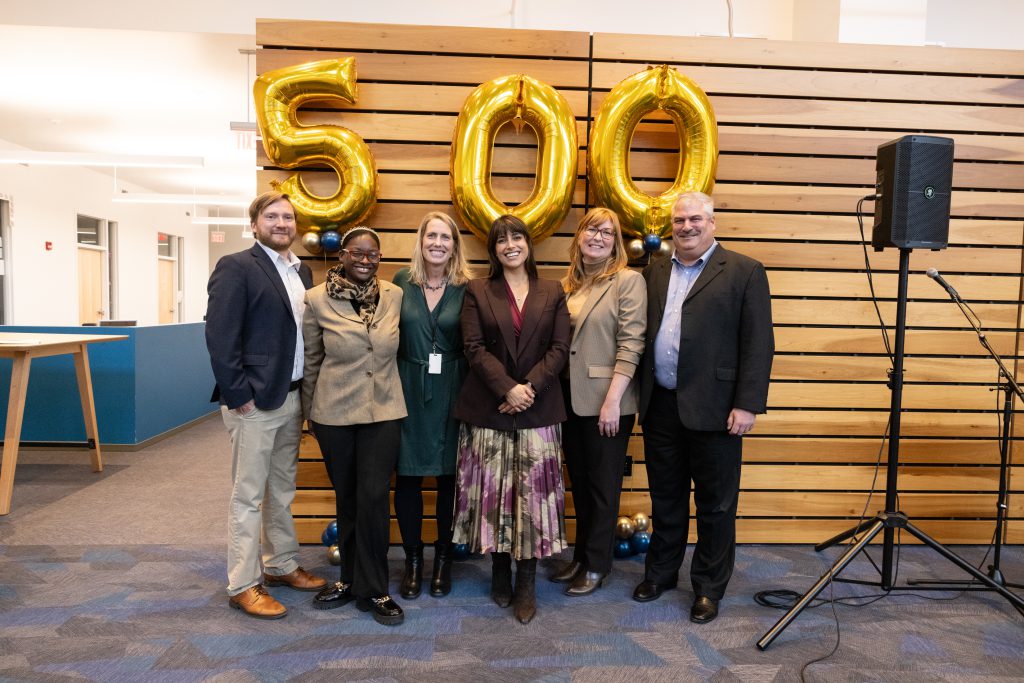
The Allegheny County team celebrating day 500. Left to right: Ed Nusser, Director of Housing Strategy; Andrea Johnson, 500 in 500 participant; Erin Dalton, Director of Human Services; Sara Innamorato, County Executive; Lauren Connelly, Director Economic Development; Rich Stephenson, Director of Allegheny County Housing Authority.
County Executive Innamorato said, “I’m thrilled with the success of 500 in 500. Not only did we exceed our goals in terms of identifying units and housing people, we forged new partnerships and changed systems that will continue to provide lasting benefits well past day 500.”
Thank You to Our Partners
Government Partners
Allegheny County Department of Human Services
Allegheny County Economic Development
Allegheny County Housing Authority / Glenshaw Gardens
City of Pittsburgh
Housing Authority of the City of Pittsburgh
PA Housing Finance Agency
Urban Redevelopment Authority of Pittsburgh
Property Owners
Action Housing
Baltic Steel Management
Brandywine Communities
Clairton Community Properties
Hullett Properties
MS Capital Group Pittsburgh LLC
NDC Asset Management
Rising Tide Partners
Trek Development
Foundations
Buhl Foundation
Eden Hall Foundation
The Heinz Endowments
Henry L. Hillman Foundation
Richard King Mellon Foundation
Download Full Report (PDF, 150 MB)
Questions or Feedback?
We welcome your questions and suggestions. To share feedback, you can reach us at DHSResearch@alleghenycounty.us. If you’d like to stay informed, consider signing up for our newsletter. To learn how to use DHS data in your research, please visit our Requesting Data page. Thank you for your time and interest. Your engagement helps shape and improve how we share data that matters.
DHS invites you to view this page to learn about Highland Detention Center —a part of the juvenile justice process. This center opened in July 2024 on the site of the former Shuman Detention Center, which closed in September 2021. Information is also available on youth detained at the former Shuman Detention Center from 2016 through its closure.
Home presents the purpose of the dashboard, provides context about youth detention and introduces the two main aspects of this dashboard: Highland Detention Center and the formerly known Shuman Detention Center.
Data and Definitions lists terms used across dashboard tabs and offers users context about the data.
Information About Program Involvement explains how the dashboard calculates program involvement in relation to detention events, defines the time windows used to measure involvement before detention and after release, and shows examples of how the dashboard applies those windows.
Highland Daily Census and Demographics is an interactive tab that displays instances of detention at Highland, providing daily counts and averages for stays, along with demographics by race, sex and age.
Highland Entries, Exits and Lengths of Stay is an interactive tab that provides data on admissions, releases and the time spent at Highland Detention Center for detained youth.
Highland Highest Open Charges is an interactive tab that displays types of charges and identifies whether youth had an open warrant or weapon involvement at admission to Highland Detention Center.
Pre-Detention Program Involvement is an interactive tab that summarizes youth involvement across human services, physical and behavioral health, public benefits and criminal justice systems within defined time windows prior to detention.
Post-Release Program Involvement is an interactive tab that summarizes youth involvement across human services, physical and behavioral health, public benefits and criminal justice systems within defined time windows following release from detention.
Shuman Daily Census and Demographics is an interactive tab that shows detention at Shuman prior to its closure, with daily counts and averages for stays and demographics by race, sex and age.
Shuman Entries, Exits and Lengths of Stay is an interactive tab that details how youth moved through Shuman prior to its closure, providing data on admissions, releases and time spent in detention.
How the County Uses this Information
DHS, their partners and the County as a whole use this dashboard to:
Monitor trends in youth detention at Highland Detention Center.
Promote transparency and build shared understanding around youth detention in Allegheny County.
For the best experience, we encourage exploring the dashboard on it’s full site. You can view it directly here.
Questions or Feedback?
We welcome your questions and suggestions. To share feedback, you can reach us at DHSResearch@alleghenycounty.us. If you’d like to stay informed, consider signing up for our newsletter. To learn how to use DHS data in your research, please visit our Requesting Data page. Thank you for your time and interest. Your engagement helps shape and improve how we share data that matters.
We invite you to view this page and the Substance Monitoring Interactive Dashboard to learn about substance use in Allegheny County.
Background
Traditional data to track substance use—such as hospital records, medical claims and overdose fatalities—are delayed and incomplete. These methods also miss the emergence of new substances in communities. To close these gaps in knowledge and service engagement, Allegheny County partners with Prevention Point Pittsburgh and the UNC Street Drug Analysis Lab to provide drug checking ⓘ and Biobot for wastewater surveillance. ⓘ
By combining data on wastewater analysis and drug checking results, Allegheny County has an increased understanding of local trends in the drug supply and in volume of substance use. This information, coupled with the more traditional data on substance use, helps the County make data-informed decisions that enhance the timeliness and effectiveness of substance use prevention, intervention and treatment efforts.
Homepage: The Homepage presents the purpose of the dashboard, outlines the gaps in substance use monitoring, and introduces the two core data sources for this dashboard: wastewater analysis and drug checking results.
Wastewater Surveillance Data is an interactive tab where users can filter by type of high-risk substance, track its presence in wastewater over time, and compare local, regional and national findings.
PPP Drug Checking Results is an interactive tab that allows users to select substances of interest, adjust timeframes, and compare suspected and actual sample contents.
About Wastewater Data details the collection and testing process conducted by Allegheny County Sanitary Authority (ALCOSAN) and Bibot, defines parent drugs and metabolites, and includes a brief glossary of some high-risk substances.
About Drug PPP Checking defines drug checking, describes how Prevention Point Pittsburgh and the UNC Street Drug Analysis Lab collaborate and states the value drug checking provides the community.
Wastewater Download View is a tab that lets users view and download data on the effective concentration for high-risk substances in wastewater, with filters for substance name, drug type, region and date range.
The data contained in this dashboard serves as indicators of broad trends and emerging risks in the community rather than exact prevalence rates in substance use.
How the County Uses this Information
DHS and its partners use the dashboard to:
Monitor substance use trends in Allegheny County.
Supplement traditional data sources to fill gaps in drug tracking.
Identify emerging risks and make informed adjustments to outreach efforts.
Coordinate with agencies and providers to deliver timely, targeted harm reduction interventions.
Compare local data with broader contexts to guide planning and resource allocation.
Trouble viewing the dashboard below? You can view it directly here.
Questions or Feedback?
We welcome your questions and suggestions. To share feedback, you can reach us at DHSResearch@alleghenycounty.us. If you’d like to stay informed, consider signing up for our newsletter. To learn how to use DHS data in your research, please visit our Requesting Data page. Thank you for your time and interest. Your engagement helps shape and improve how we share data that matters.
The Allegheny County Department of Human Services (DHS) partnered with Pittsburgh Regional Transit (PRT) to launch a new transportation assistance program in November 2022 called the Discounted Fares Pilot. This program offered free and reduced-price PRT rides for county residents ages 18 to 64 who receive Supplemental Nutrition Assistance Program (SNAP) benefits, along with their 6- to 17-year-old children. The fare discounts were allocated using a lottery. Each household in the pilot was randomly assigned to one of three groups, each with equal probability. One group received unlimited free PRT trips, a second group received a 50% discount on all PRT trips, and a third group received no discount. The fare discounts lasted 16 to 19 months for the free-fare and half-fare groups.
Key Takeaways
The Pilot began with strong enrollment—over 14,000 people. A total of 9,544 adults and 4,928 children enrolled in the Pilot during the three-month open enrollment period. The majority of adult participants were female (72%) and Black (59%). Participants reported taking an average of ten PRT trips per week and spending an average of nearly $30 on public transportation per week at the time they enrolled in the Pilot.
Free fares increased public transit ridership. On average, participants in the free-fare group took 1.48 more trips per week—a 43% increase—compared to those who paid regular price for their trips. In contrast, transit usage among participants who received half-priced fares was not statistically different from those who paid regular price for their trips.
Fare discounts eased financial hardships. Near the end of the discount period—around 15 months into the pilot program—recipients of free fares reported spending $17.09 less per week on public transit compared to participants who paid full price for their transit usage. Participants paying half-priced fares reported spending $5.64 less per week on public transportation than participants who paid full price for each ride.
Among participants who began the study without a job, free fares led to meaningful gains in employment and income. Over the first year and a half of the program, unemployed individuals who received free transit were 6% more likely to secure paid work than those who paid full price. Free-fare recipients also earned nearly $2,850 more—a 28% increase in earnings—compared to participants who covered their own transit costs. These findings suggest free public transit can increase financial stability and employment opportunities for low-income residents in Allegheny County.
The short duration of the fare discounts may have limited their impact on other social and educational outcomes. The study found small and statistically insignificant impacts on healthcare utilization and criminal justice involvement (including appearances in court). Fare discounts had no detectable impact on school attendance among children who attend Pittsburgh Public Schools.
How DHS Uses This Information
DHS has used the results from this pilot to inform the design and implementation of a longer-term program called AlleghenyGo, which offers a 50% PRT discount for working-age county SNAP beneficiaries and their children. Click here to learn more about AlleghenyGo.
We welcome your questions and suggestions. To share feedback, you can reach us at DHSResearch@alleghenycounty.us. If you’d like to stay informed, consider signing up for our newsletter. To learn how to use DHS data in your research, please visit our Requesting Data page. Thank you for your time and interest. Your engagement helps shape and improve how we share data that matters.
The Allegheny County Department of Human Services (DHS) regularly collects feedback from community members who use DHS and DHS-funded programs. Collecting and using this feedbackdemonstrates a commitment to continuous quality improvement, increasing trust among service users. DHS also administers broad-scale research surveys that gather data to help the Department conduct rigorous program evaluations. Recognizing the time and effort required for clients to participate in these activities, and the value of having higher, representative response rates, DHS has a standard practice of providing monetary incentives.
Key Takeaways
Thedata brief discusses the challenges of and solutions to scaling monetary incentives at large organizations, and it provides summary analytics about DHS’s incentive spending from Fall 2020 through December 2024.
In Fall 2022, DHS invested in two key partnerships, including a digital gift card platform, that has resulted in collecting more client feedback and human subjects research than ever before.
From 2020 to 2023, the number of clients who were given a gift card for their participation in data collection increased by nearly one order of magnitude each year.
Offering incentives increased participation rates, improved sample representativeness, and reduced the amount of staff time needed for data collection.
While incentives encourage participation with research activities, gift card redemption is largely influenced by the gift card amount; only 21% of gift cards $5 or less are redeemed while 91% of gift cards $30 or more are redeemed.
The top 3 brands for which participants choose to redeem their digital gift cards are Amazon (29.8%), Mastercard (9.5%) and Visa (9.2%).
Why This Matters and What’s Next
Client feedback helps DHS and its providers identify what services are working well and what are not meeting clients’ needs. Offering incentives increases participation rates, and higher participation rates lead to a more representative dataset to inform public policy decisions.Using technology-based business processes to collect data and process incentives allows DHS to do this at scale across nearly 500 contracted providers and over 200,000 clients served annually. Having extensive and robust feedback from the public ensures that residents are active partners in shaping service systems — and that those service systems are responsive, equitable and reflect the needs and priorities of the community.
Questions or Feedback?
We welcome your questions and suggestions. To share feedback, you can reach us at DHSResearch@alleghenycounty.us. If you’d like to stay informed, consider signing up for our newsletter. To learn how to use DHS data in your research, please visit our Requesting Data page. Thank you for your time and interest. Your engagement helps shape and improve how we share data that matters.
DHS’s Strategic Initiatives are bold, transformative efforts designed to improve the effectiveness of human services for everyone. These reports describe innovative strategies aimed at supporting the people of Allegheny County and detail featured accomplishments that have strengthened essential systems in the County.
2025 Strategic Initiatives
Strategic initiatives featured in the 2025 report include expanding caregiver support, improving access to key programs for individuals with serious mental illness and developing crisis support for families involved in the child welfare system. View the 2025 Strategic Initiatives report here.
2024 Accomplishments
During 2024, DHS and its partners made significant progress toward achieving several goals by focusing on annual Strategic Initiatives. The 2024 Accomplishments report features several accomplishments, including the launch of Allegheny Go, an increase in the number of people transitioning from shelter to permanent housing, reduced wait times for Allegheny Link, improved access to support for seniors and fewer law enforcement encounters.
The Allegheny County Department of Human Services (DHS) engages clients and others who interact with DHS programs in a variety of ways: regular roundtables/cabinets (e.g., Children’s Cabinet); town halls and community forums; social media (e.g., Facebook and LinkedIn); and the Director’s Action Line (DAL). In 2018, DHS expanded its public engagement strategy to include SMS text messaging (texting), a tool that is convenient for recipients and allows DHS to scale up communication with clients and other Allegheny County residents.
How does DHS use text outreach?
DHS uses text outreach in a variety of ways, including collecting feedback after a service touchpoint, increasing program engagement, recruiting for paid research opportunities, and providing timely alerts. Text messaging has allowed DHS to connect clients to resources at scale, and to solicit feedback from clients who would likely never otherwise have the time or opportunity to share their feedback.
What data is available?
The data brief provides more information about the communication strategy and descriptive analytics from 2018 to 2022. The interactive dashboard, which is updated daily, allows users to drill down to individual text campaigns to understand the purpose, the number of messages sent, and the demographics of people who were contacted.
Terms and Conditions
This service is used by the Allegheny County Department of Human Services to send you notifications about publicly funded services. You can cancel this service at any time. Just text “STOP” to 987987. After you send the message “STOP” to us, we will send you a reply message to confirm that you have been unsubscribed. After this, you will no longer receive messages from us. If you want to join again, just text “START” to 987987, and we will start sending messages to you again. If at any time you forget what keywords are supported, just text “HELP” to 987987 After you send the message “HELP” to us, we will respond with information about the program. Message frequency varies. Carriers are not liable for delayed or undelivered messages. As always, Message and Data Rates May Apply for any messages sent to you from us and to us from you. If you have any questions about your text plan or data plan, it is best to contact your wireless provider. For all questions about the services provided by this short code, you can contact us at DHS-Research@alleghenycounty.us
Allegheny County residents face significant challenges in accessing behavioral health services, an issue highlighted by recent studies and surveys. Notably, a Countywide survey revealed that 42.7% of respondents believe improving access to mental health care, particularly for young people, should be a priority. This finding is supported by research from the University of Pittsburgh, which documented long wait times for appointments and challenges in connecting with providers. These issues stem from a critical shortage of behavioral health professionals and are compounded by time-consuming provider search processes.
In response, the Allegheny County Department of Human Services (DHS), along with Community Care Behavioral Health (CCBH), the County’s behavioral health managed care organization, are pursuing a series of investments and initiatives aimed at addressing these barriers and increasing service availability.
To improve access and reduce wait times, DHS and CCBH are focusing on:
Creating visibility into appointment availability so clients and providers spend less time searching for services.
Supporting the behavioral health workforce through loan repayment and cohort-based training programs to increase the number of providers.
Investing in community-based mental health supports to offer additional options outside the traditional system.
Expanding access to proven treatments like medication-assisted therapy for opioid addiction, cognitive behavioral therapy and group therapy.
Augmenting clinical decision-making to ensure those who need help most get it quickly
The Allegheny County Department of Human Services (DHS) funds programs to assist young adults who are transitioning out of the child welfare system (also known as transition-aged youth) to secure employment, education, housing, behavioral health services, financial advice and more. Despite these service offerings, transition-aged youth have higher rates of homelessness, substance use, mental health challenges and incarceration, as well as lower rates of high school graduation compared with people who were not involved with the child welfare system. While targeted services are important, some human service needs result from poverty, which can be mitigated by providing direct financial assistance.
What is this report about?
In the summer of 2023, DHS launched a direct cash support program called Cash Assistance for Allegheny Young Adults (CAAYA), which provided a one-time payment of $4,000 to young adults, ages 18 through 22, with a history in the child welfare system, who were experiencing homelessness or were young parents who had an open case with Allegheny County’s child welfare office. In this report, we present a mixed-methods approach to evaluating the impact of CAAYA, including longitudinal surveying, a quasi-experimental analysis of administrative data in the Allegheny County Data Warehouse, and semi-structured interviews with cash recipients.
What are the takeaways?
CAAYA recipients demonstrated significant financial need. At the launch of the program, only 35% reported being currently employed and only 29% reported being in school either full-time or part-time. Those who had some form of formal employment in the 12 months before the program had mean annual earnings of $10,174. Twenty-eight percent had one or more children.
CAAYA recipients also lacked financial support within their community. Two-thirds of recipients reported not knowing anyone who would lend them $500 in a time of crisis.
Overall, the program encouraged about 100 individuals to open a bank account. Seventy-five percent (n = 774) of recipients chose to receive the money via bank account transfer and 25% via a virtual gift card.
Recipients used the cash assistance quickly. On average, $2,769 of the $4,000 was spent within the first month.
Car-related expenses ranked as the number one item for planned expenditures, and there was a 41% relative increase in car ownership three months after receiving the money.
The program improved self-reported well-being after receiving financial assistance, but the effects faded in the subsequent months.
CAAYA recipients increased their use of mental health outpatient therapy by 7% compared to a control group of individuals who were narrowly ineligible for the program. There was no change in utilization of crisis and inpatient services. In contrast to self-reported well-being, the program’s impact on usage of outpatient mental health services persisted for at least eight months after receiving funds.
How is this report being used?
As a result of this program, we are exploring additional opportunities to leverage cash assistance with this population to increase engagement in holistic supports and services. We are also considering longer-term programs with more frequent, smaller payments to targeted populations. For future programs, we hope to receive state waivers for the impact of cash assistance on public benefits, especially if a program is designed to include ongoing payments.
For other local governments or providers who are considering cash assistance programs, we hope this report serves as a resource for program design and evaluation. Local governments should note that the success of the CAAYA program would not have been possible without our partner organizations. Trust in government significantly impacts the accessibility of services, particularly for marginalized communities. When first hearing about the cash assistance, many individuals who were eligible to receive the money thought that it was a scam. This skepticism was eased by having multiple trusted intermediaries ensure that it was a real program and that they should apply.
The Allegheny County Department of Human Services (DHS) partnered with Pittsburgh Regional Transit (PRT) to launch a transportation assistance program called Allegheny Go. This program offers half-price PRT rides for county residents ages 12 to 64 who receive Supplemental Nutrition Assistance Program (SNAP) benefits, and do not receive any other transit fare discounts.
Allegheny Go builds on the success of the Allegheny County Discounted Fares Pilot Program, which ran from November 2022 through June 2024.
This dashboard describes the application process and reports on application statistics and participant demographics.
How is this dashboard being used?
DHS has set a goal of enrolling 15,000 participants in Allegheny Go. This dashboard tracks progress towards that goal. Staff monitor how many applications are received, how many are eligible, and make sure eligible participants receive their discounts.
Since 2016, the Allegheny County Department of Human Services (DHS) in Pennsylvania has utilized the Allegheny Family Screening Tool (AFST), which assists child welfare call screening caseworkers in their assessment of general protective service (GPS) referrals regarding potential child maltreatment.
What is this report about?
This report reviews the research evidence on algorithms in child welfare, specifically focusing on the causal impacts of the AFST and comparable predictive risk models (PRMs). It begins by summarizing the influence of these tools on child welfare decisions. The report then explores the discrepancies between perceived and actual effects of these models, highlighting the importance of bridging the gap between perception and reality to alleviate concerns and maximize the effectiveness of these tools.
What are the takeaways?
The impacts of predictive risk models in child welfare must be compared with alternative approaches to augmenting call screening caseworker decision-making. Traditional risk assessments in child welfare have been largely manual, prone to inconsistencies, and often omit critical information. Before implementing the AFST, Allegheny County did not employ any structured risk assessment.
The main conclusions from recent research on the AFST are:
The AFST changed the composition of investigated referrals. The introduction of the AFST decreased the probability of investigation for referrals with low risk of removal and increased the probability of investigation among referrals with high risk of removal. The introduction of the AFST also reduced the racial gap in investigation rates, particularly among higher risk referrals.
The AFST is reducing, not increasing, racial disparities. Researchers found that the introduction of the model reduced racial disparities in investigation rates across AFST scores, although the size and precision of the reduction varied. The AFST reduced the racial disparity in investigation rates for the highest risk referrals by 83%, from 10.6% to 1.8%. The researchers estimated that the AFST reduced the Black–White gap in removal rates of screened-in referrals by 73%, from 4.3% to 1.2%.
Screeners use the algorithm but with caution. Researchers found that call screening case workers are integrating information from the AFST effectively, aligning their decisions more closely with predicted removal risk compared with the period before the tool’s introduction. The tool is seen as a helpful source of additional information rather than a replacement for professional judgment.
How is this report being used?
The application of algorithms to support decision-making, especially in sensitive areas like child welfare, mandates high transparency. It is critical that the complexities of predictive risk models are communicated clearly to all stakeholders to maintain trust and prevent misuse. DHS is committed to keeping the public informed about the use and impact of algorithms at the Department and draw upon current research to shape the implementation of these tools in the field.
The Allegheny County Department of Human Services (DHS) conducts a Community Need Index (CNI) to identify specific areas that are in greater need, and face larger socioeconomic barriers, relative to others. The newest version of the CNI index ranks neighborhoods by need level by looking at:
The percentage of families who live below the poverty line
The percentage of unemployed or unattached males
The percentage of those aged 25 and up without at least a Bachelor’s degree
The percentage of single parent households
The percentage of households without internet access
Rate of homicide per 100,000 residents
Rate of fatal overdoses per 100,000 residents
The researchers used a census tract level to break up the region and assess needs. Census tracts are static, relatively small subdivisions of a county.
How can I view the findings?
An interactive map allows users to view and extract data from the 2024 CNI (which uses 2022 five-year data estimates and totals). The new report focuses on all of Allegheny County, examines changes in need over time, and places emphasis on the connection between race and community need. Earlier reports are linked below.
What are the takeaways?
In Allegheny County, we continue to find the highest levels of need in specific sections of the City of Pittsburgh (Hill District, South Hilltop, parts of the West End, Upper East End neighborhoods, Upper Northside) as well as census tracts outside the City of Pittsburgh (Mon Valley, sections of the Allegheny County River Valley, sections of Penn Hills, sections of Wilkinsburg, Stowe-Rocks).
There are vast discrepancies between the lowest need communities, which have an average poverty rate of 2%, and the highest need communities, where the average poverty rate is 38%.
With few exceptions, census tract-level community need is persistent over time.
Only about one-third of Allegheny County’s Black residents live in lower-need communities. For every other racial and ethnic group in the County, the majority of residents live in lower need communities. Black communities in Allegheny County have disproportionately high levels of need, as do a number of racially mixed communities.
Poverty status alone does not account for where various racial and ethnic groups tend to live by level of need; poor Black and Latino families are more likely than other poor families to live in higher need communities. Even Black families above the poverty line are many times more likely than their Asian, White and Latino peers above the poverty line to live in higher need communities.
How is this report used?
The geographic dimensions of community need can help inform many aspects of DHS’s strategic planning and resource allocation decisions, such as decisions on where to locate Family Centers or new after-school programs.
Where can I go for more information?
For more information, you can read previous reports below. Or you can reach out to DHS-Research@alleghenycounty.us with any questions.
County human services includes programs from over 300 community-based agencies and is delivered by social workers, peers, and outreach staff working all throughout the county. These staff run out-of-school-time programs, answer hotlines, investigate reports of potential harm to children and vulnerable adults, deliver meals to seniors and run Senior Centers, make home visits to families with newborns, and do the administrative work that makes our human services run efficiently.
What is this report about?
This report highlights the 2023 accomplishments that stood out. There are many, many other achievements that people told us about. We chose the ones that made the biggest difference.